Concrete Steps Construction in Chesterfield MO - a sturdy entry sized to your door
Crumbling, flaking or sinking front steps? We build new precast or poured concrete steps that fit your entry and stand up to Missouri winters.
What does it take to build new concrete steps in Chesterfield?
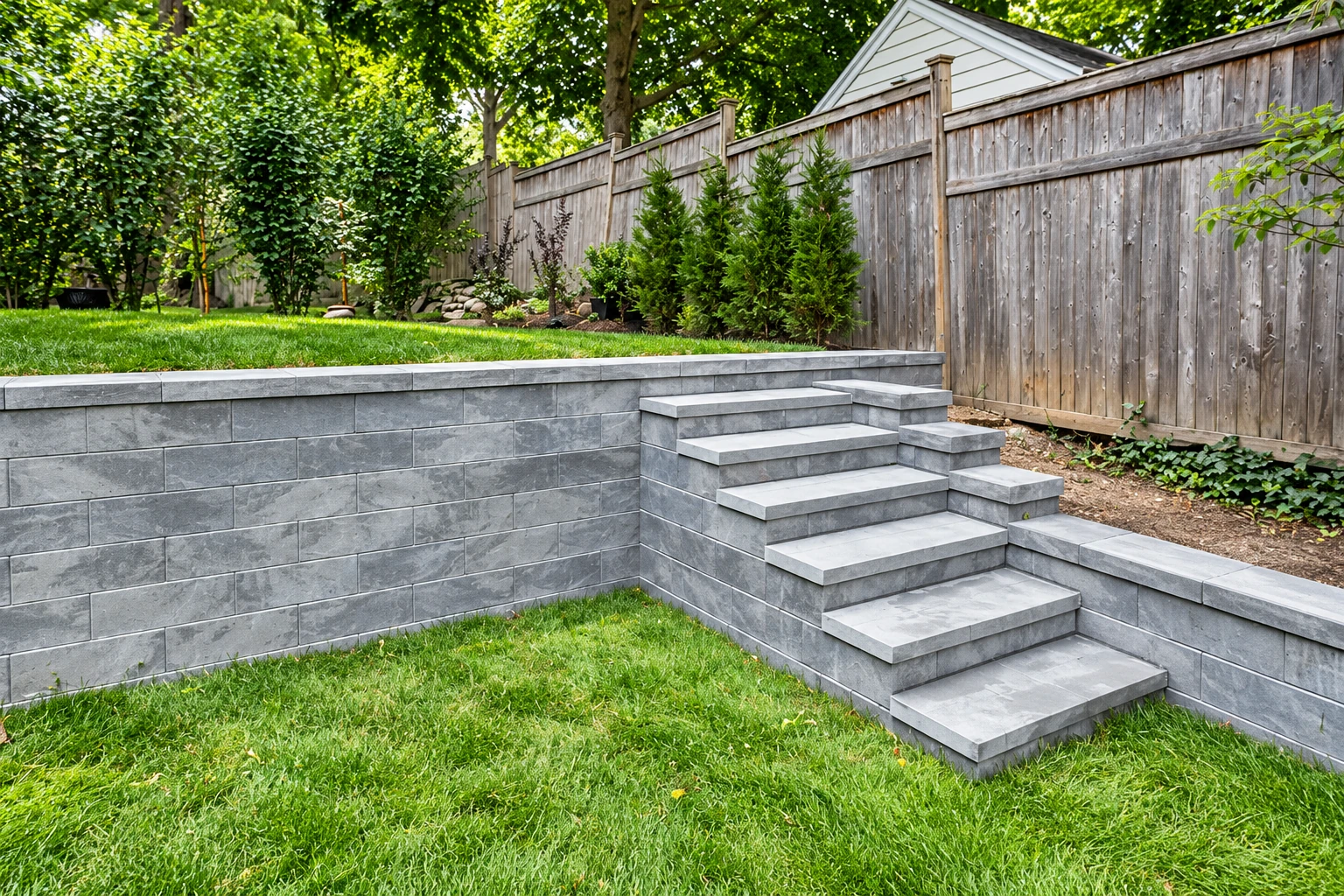
Concrete steps construction in Chesterfield, MO means tearing out a worn entry and building a new one, either from precast units set in place or from steps we form and pour right at your door, sized to your landing and built on a base that won't settle.
Most people call when the old steps start flaking, cracking or tipping away from the house, and the first choice is whether precast or poured makes sense for your door. The price mostly turns on how many steps you need, which method you pick and how much old concrete has to come out. The schedule turns on the city and county approvals and on weather that suits a pour, and your written estimate spells out what's in the price and what isn't. We're based in Chesterfield and work across the cities around it in St. Louis County and St. Charles County. We're fully licensed and insured, and we find out which city and county offices your address answers to and handle the permit paperwork with you before we set a date. If the steps are part of a bigger build, we plan them with the slab foundation so the entry lands at the right height.
How do you know your front steps need replacing?
Steps take a beating from feet, water and every freeze and thaw, and they usually tell you when they're done. These are the things homeowners notice before they call us.
The top surface is flaking or peeling, which is usually freeze-thaw damage working into the concrete.
The steps have pulled away from the house, leaving a gap that usually means the ground underneath settled.
Treads tip forward or to one side, which usually means the ground under one corner has given way.
Water puddles on the treads or runs toward your door because the steps have shifted and lost their slope.
Corners and edges keep chipping off, leaving loose pieces and a ragged edge where you put your foot.
Deep cracks run across a tread and keep widening each winter, which usually means the step has split clear through.
If a step rocks under your foot or a tread has tipped, call before someone trips on it rather than waiting for the next freeze to make it worse.
What happens when you call about new steps in Chesterfield?
From the first visit to the last walk-through, I'm on the job myself, and the approvals and the weather set most of the calendar. Here's how a steps job usually runs.
I come look at your entry
I come out myself, look at the door, the landing and the ground the old steps sit on, and ask how you use that entry. I lay out precast and poured side by side so you can weigh price against how each one fits your door.
You get a written estimate
It's in writing, with what's in the price and what isn't, for the method you lean toward. That makes it easy to compare with anyone else's number.
Approvals first, then a date
City staff usually review the zoning approval in 3 to 5 business days before St. Louis County issues the building permit, so we build that wait into your start date. Once approvals are in, we pick a pour date the weather agrees with.
We build it and walk through
Our small crew tears out the old steps, preps the base, then forms and pours or sets the precast, with me working alongside. When it's done, we walk the finished steps with you and go over how to care for them that first season.
Get a written price for your new steps
Tell us how many steps, how wide the entry is and whether you lean precast or poured. We reply within one business day, then I come out for a free on-site estimate with no pressure and no obligation.
- Call
- (636) 237-0079
- Hours
- Mon–Fri: 8 AM–11 PM, Sat–Sun: 7 AM–11 PM
Precast or poured steps, and what goes under them
Precast steps are hollow units made ahead of time and set in place, so they go together easier, but they come in set sizes. Poured steps are formed at your door, which is why they handle odd door heights and wider landings. My lean is simple. If a precast unit fits your door and landing, take it. If it doesn't, pour, because forcing a stock size onto the wrong entry never ends well.
What goes under the steps matters more than the face. The subgrade, the ground the steps sit on, has to be dug out and packed, not raked level, or the steps settle with the dirt and tip away from the house. The top gets a broom finish, a light brushed texture that keeps a wet tread from getting slick. If the budget gets tight, cut a finish option before you cut base work. Nobody notices a good base on day one, and everybody notices a bad one a few winters later.
It's fair to ask anyone who bids your steps about the concrete itself. The National Ready Mixed Concrete Association ties dense, good quality concrete with entrained air, tiny bubbles mixed in that give freezing water room to expand, and good curing to a lower chance of the surface flaking. Curing is the wait while fresh concrete gains strength, and rushing it shows up later as a weak, dusty top.
Concrete steps questions we hear in Chesterfield
Which costs less, precast or poured concrete steps?
Precast steps cost less, and poured steps cost more but come in a larger range of sizes. Both are usually priced per step, so the more steps your entry needs, the more either one costs.
How much do concrete steps cost in the St. Louis area?
Installing concrete steps in the St. Louis area usually costs about $600 to $4,700 per job. Where yours lands depends mostly on how many steps you need, precast or poured, and how much old concrete has to come out. Your written estimate lists what's in the price and what isn't, so there's no guessing.
Can concrete steps be poured in winter in Chesterfield?
Yes, poured steps can go in during winter as long as the fresh concrete is protected from freezing until about two days after it's placed. Fresh concrete freezes if its temperature drops below about 25°F, and once it's frozen it won't be durable. We cover poured steps and keep them from the cold while they set, and if the forecast won't cooperate, we wait or talk through precast.
How do I get approval to build new front steps in Chesterfield?
You start with a zoning approval from the City of Chesterfield, which it requires before any construction project, and then St. Louis County issues the building permit for new work and changes to existing structures. After the city review mentioned above, we check your job against the county's list of work that needs no building permit, and you can call the county with permit questions at (314) 615-5184. If the tear-out needs a roll-off container, the city requires its own zoning approval for it, good for 30 days with no fee, and it has to sit on your driveway, not the street, sidewalk or yard.
How long do concrete steps last?
Concrete steps last about 30 to 40 years with proper care and upkeep, so the first winter counts. The same association advises skipping deicing chemicals on new concrete that first winter and using them in moderate amounts after that.
What causes concrete steps to flake and peel?
Flaking and peeling, called scaling, comes from freeze and thaw cycles working on the finished surface of the concrete. Minor scaling is mostly cosmetic and may not need repair, and light to moderate scaling can be repaired. Once it's heavy and still spreading, repair may not be feasible, so the time to call is while it's light.
Foundation work that ties into your steps
Slab foundation building
A garage or porch built on a new slab sets the height your door and steps have to meet, so we plan the two together.
Foundation installation
Building a new house or addition means the foundation goes in first, and planning the entry steps with it saves tearing anything out later.
Get your new steps on the schedule
Call (636) 237-0079 any day of the week until 11 PM, or send the contact form with your step count and entry width, and we'll start lining up your approvals.
Mon–Fri: 8 AM–11 PM, Sat–Sun: 7 AM–11 PM