Concrete patio construction in Chesterfield MO - a slab that holds up through winter
Old patio cracked, sinking or crumbling? We build a new concrete slab on a dug-out, packed base, with a mix ordered for freezing winters.
What does it take to build a concrete patio in Chesterfield?
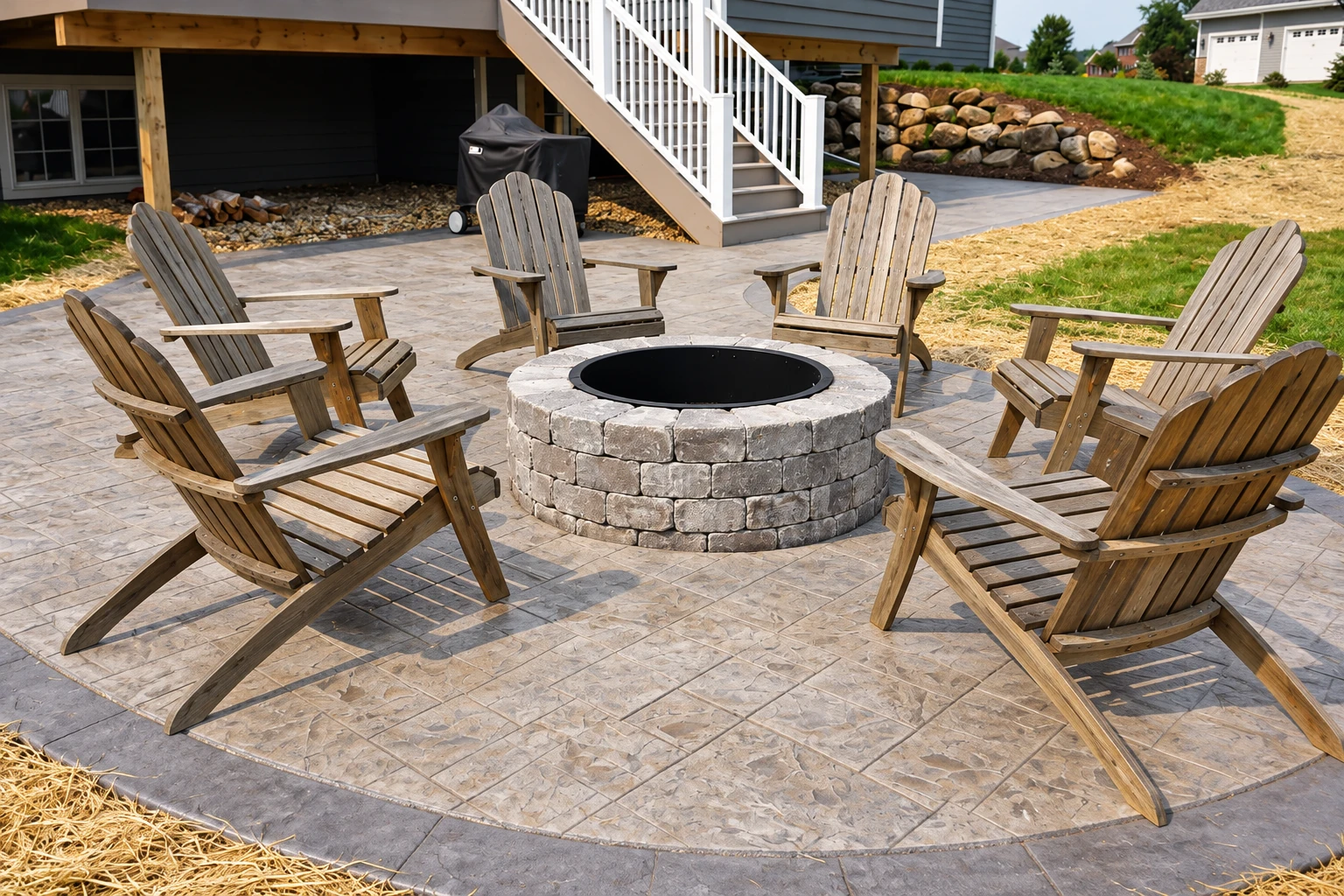
Concrete patio construction in Chesterfield means digging out the spot, packing a solid base and pouring a slab that gets finished, protected and cured. At Caliber Chesterfield Concrete Company, the base gets more of my attention than the surface, and most of the calendar goes to approvals and weather, not the pour itself.
Most patio calls I get come from people with an old slab that's cracked, sunk or crumbling, or a patch of lawn by the back door they're done mowing around. The price comes down to size, how much digging the base needs, how hard it is to get concrete into your backyard and the finish you pick, since a plain broom finish costs less than stamped concrete and a sidewalk out to the driveway adds its own share. The schedule turns on city and county approvals and the weather. We're fully licensed and insured, and we find out which offices your address answers to and handle that paperwork with you, so approvals are in place before we set a pour date. Your written estimate lists what's in the price and what isn't.
How do you know your patio needs replacing?
Most old patios give plenty of warning before they fail outright. These are the things homeowners usually notice first, and what each one tends to say about the slab and the ground under it.
Cracks that keep getting wider or run clear across the slab usually mean the base underneath has moved.
A patio that has sunk or tipped at one corner is usually sitting on dirt that was never packed.
A surface that's chipping, flaking or turning to dust often points to a weak top from the original pour.
A gap opening up where the patio meets the house or the steps tells you the slab has shifted.
Weeds and grass coming up through the cracks mean the slab has split all the way through.
If you've outgrown the space and the table and grill won't both fit, that's reason enough to pour a bigger one.
When a slab has dropped near the house or turned into a trip hazard, call instead of waiting another season, because a moving slab rarely settles down by itself.
What happens after you call us about a patio?
Here's how a patio job runs with us in Chesterfield and the cities around it in St. Louis County and St. Charles County, from the first visit to the final walk-through.
I come out and look
After you call or send the form, I come out myself, look at the ground and whatever's there now, and ask how you'll use the patio. A grill and two chairs need a different slab than a table for eight.
You get it in writing
The written estimate covers the size, the mix, the finish and the base work, with what's in the price and what isn't, so you can compare it fairly. Once you say go, we line up the approvals, and the city's own review usually takes 3 to 5 business days, so plan that in before work starts.
We prep and pour together
We pick a pour date the weather agrees with, then our small crew digs out, packs the base, sets the forms and pours, with me working alongside. After that the slab needs time to cure before anyone uses it.
We walk it with you
When it's finished we walk the patio together and go over how to care for it through its first season. You'll know when it's ready for foot traffic and when the furniture can go back.
Get a written estimate for your new patio
Send the form and we'll reply within one business day to set a time. I'll come out for a free on-site estimate, and you'll get it in writing, with no pressure and no obligation.
- Call
- (636) 237-0079
- Hours
- Mon–Fri: 8 AM–11 PM, Sat–Sun: 7 AM–11 PM
Base, mix and finish choices for a patio
The base is where I'd spend your money first. The subgrade, the ground the slab sits on, gets dug out and packed instead of raked level, because loose dirt settles and takes the patio down with it. Nobody sees the base on day one, which is why it's the first thing a tight budget cuts and the first thing you notice a few years later. If something has to give, I'd give on the finish.
The mix matters almost as much. Concrete made with less water for the same cement comes out stronger and shrinks less as it hardens, so we don't thin it down just to make finishing easier. Rebar, steel bars set in a grid inside the slab, helps hold the pieces together if it does crack. We also keep pours out of midday heat, since a slab that bakes too fast can end up with a weak, dusty top.
A plain broom finish, a light texture dragged across the wet surface so feet don't slip, suits most patios, and I'll tell you so. After finishing comes curing, keeping the slab damp and protected while it gains strength, which is why the chairs wait a while. We settle the mix and the season with you before anything gets formed, because a patio poured in the wrong week pays for it later.
Patio questions we hear around Chesterfield
How much does a concrete patio cost in the St. Louis area?
A concrete patio in the St. Louis area usually runs about $4 to $11 per square foot, materials and labor included. Where yours lands depends on the size, how much base work the ground needs, how easy the backyard is to reach and the finish you choose. Your written estimate gives your own number, with what's in it and what isn't.
What approvals does a patio project need in Chesterfield, MO?
In the general process the city describes, Chesterfield first reviews and approves a zoning application, and then St. Louis County issues the building permit for new construction. City staff check the project against zoning rules, which can include setbacks from your property line, and if your fire district requires its own permit, that's a separate approval. The county keeps a list of work that needs no building permit and can walk you through it at (314) 615-5184, and city questions go to the Planner of the Day line at 636-537-4733. We handle the paperwork with you either way.
What is the best concrete mix for a patio that freezes and thaws?
Good quality air-entrained concrete is what a national concrete trade group advises for hard freeze-and-thaw conditions. Air-entrained means tiny bubbles are mixed in to give freezing water somewhere to go, and it has to be ordered that way from the supplier before the pour. That's why we settle the mix with you at the estimate, not on pour day.
What is the best time of year to pour a concrete patio in Chesterfield?
A mild stretch of weather is best, because cold slows curing and hard heat can leave a weak top. When a pour has to happen in the cold, concrete trade groups advise working under a cold-weather plan, which can mean insulated blankets, wind protection, heated enclosures or simply waiting for milder days. We pick the pour date with you around the forecast.
Will a new concrete patio crack like my old one?
It can still get a hairline crack, because all concrete shrinks as it cures, but a well-built patio cracks where it's meant to and should stay level. We cut control joints, shallow grooves that give the slab a planned place to crack, while the concrete is still young, since joints cut late or skipped let cracks wander. The packed base and the lower-water mix covered above do the rest.
How do I take care of a new concrete patio in its first winter?
Shovel snow off promptly, use sand for traction where you can and skip harsh chemical deicers unless your concrete contractor or the product says otherwise. After that, concrete trade groups suggest checking the surface once a year. If water stops beading or the slab darkens quickly when wet, it may be time to reseal.
Other concrete work that goes with a patio
Stamped concrete services
If you'd like the patio to look like stone, slate or brick, stamping presses pattern and color into the slab while it's still wet.
Concrete sidewalk building
A new patio usually needs a solid way to reach it, and a poured walk from the driveway or front door keeps feet off the lawn.
Tell us where your patio goes
Call (636) 237-0079 any day of the week, or send the estimate form with the patio's rough size, its spot on the lot and the season you'd like.
Mon–Fri: 8 AM–11 PM, Sat–Sun: 7 AM–11 PM